As researchers innovate in quantum computing and hardware, open positions are growing faster than the number of people trained to work in these areas, particularly jobs that require associate’s or bachelor’s level training. Megan Ivory of Sandia National Laboratories has a physics Ph.D. and has worked on quantum science, but she now focuses on strategies for getting kids excited about quantum science and educational pathways that prepare students for a range of quantum-related careers.
Join us for a conversation about QCaMP for high school students and K-12 teachers, technician training and undergraduate education, her advice for students and tips for researchers who want to share their excitement about quantum technology.
You’ll meet:
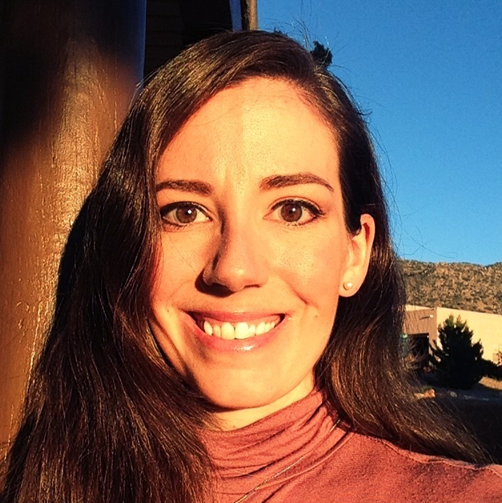
- Megan Ivory is a senior member of the technical staff at Sandia National Laboratories in New Mexico. She is associate director of quantum ecosystems for the Quantum Systems Accelerator and the co director of QCaMP, the summer camp for high school students and K-12 teachers. She co-founded the Quantum Learning Lab, a technician training bootcamp, and is co-PI of Quantum Information Science and Technology in the California State University, an effort to bring more quantum science into predominantly undergraduate institutions.
- As an experimental physicist she worked on trapped-ion applications such as atomic clocks with integrated photonics and quantum computing. She completed her physics Ph.D. at the College of William and Mary. Her My Ivory Tower website includes resources and links for quantum education opportunities.
From the episode:
Applications are open for 2026 QCaMP until April 3 for students and April 10 for educators.
The McKinsey report on the quantum talent gap: Five lessons from AI on closing quantum’s talent gap– before it’s too late.
Central New Mexico Community College in Albuquerque hosts the Quantum Technician Bootcamp through their CNM Ingenuity program. Applications are open for Fall 2026.
The National Q-12 Education Partnership is a federally funded initiative to support K-12 quantum education. Their QuanTime program provides informal outreach and education activities on quantum science topics. Megan compared it to Hour of Code. In a portion of our conversation that we couldn’t include, Megan described a QuanTime event focused on superposition that she and her colleagues hosted at a local science museum. Students created quantum emojis, thaumatropes and binary friendship bracelets. Researchers from Sandia, companies and other partnering institutions performed research demos.
The Rochester Institute of Technology’s Quantum Landscape app includes information about Quantum Information Sciences and Engineering programs across the United States.
Featured image: Students at work at Sandia’s 2025 QCaMP. Photo by Craig Fritz.
Transcript
Transcribed using otter.ai with human copyediting
Sarah Webb 00:03
It’s quantum computing season on Science in Parallel. I’m your host, Sarah Webb, and I’m talking with scientists and innovators working on the many challenges in this field. Please hit subscribe so that you don’t miss any of our new episodes.
Sarah Webb 00:21
Here, we’re talking about educating a quantum workforce at all levels, not just Ph.D.’s. Recent studies have highlighted a significant shortfall of skilled workers to fill quantum jobs. My guest is a Ph.D. physicist who wanted to work on that problem,
Sarah Webb 00:47
On Science in Parallel today and as part of our quantum computing series, I am pleased to welcome Megan ivory.
Megan Ivory 00:55
I am a principal member of the technical staff at Sandia National Labs here in Albuquerque, New Mexico. In addition to this role, I am the associate director of quantum ecosystems for the Quantum Systems Accelerator. I am the-co director of QCaMP, which is the summer camp for high school students and K through 12 teachers. I’m the co-founder of the Quantum Learning Lab, which is a technician-training bootcamp, and I’m also the co PI of Quantum Information Science and Technology in the California State University, which is an effort to bring more quantum science into predominantly undergraduate institutions.
Sarah Webb 01:35
Megan got her start in research inspired by Jodie Foster’s character in the movie Contact. She bought a telescope. Her high school physics teacher encouraged her. She did undergraduate research on accelerator physics, but didn’t work on anything truly quantum until graduate school at the College of William and Mary. There, she worked with lasers and studied the Bose-Einstein condensate, which is a quantum state of matter. Afterwards, she came to Sandia and focused on quantum research until she increasingly started thinking about how to teach quantum science to younger students. Megan and I talked in February about this career evolution, the workforce programs she’s building, the advice she gives to students and tips for researchers who want to teach and share their excitement about quantum careers.
Sarah Webb 02:35
Megan, it is great to have you on the podcast.
Megan Ivory 02:38
It’s great to be here. Sarah, thanks so much.
Sarah Webb 02:40
So how did you end up at Sandia?
Megan Ivory 02:42
I got nerd sniped, is the way that I like to put it. I was actually at a conference. This was a conference held in Albuquerque, New Mexico. So very near Sandia, there was a large presence of Sandia researchers there, and one of them approached me and said, I have a new project. We’re doing, integrated photonics on trapped ion atomic clocks, and we’re looking for postdocs. Do you know of anyone who’s searching? And I said, No, but that sounds so cool. Can we please talk more about this? And then I ended up applying for that exact position, and got it.
Sarah Webb 03:18
I love that.
Megan Ivory 03:19
I didn’t know it at the time, I just thought this integrated photonics technology was just revolutionary and was really going to change the field. And in my previous jobs, I had really tried to push for people to explore this, but it’s also rather complicated and expensive, so I just didn’t really have the opportunity. And one of the advantages we have here at Sandia National Labs is this massive fabrication facility, loads of expertise, not just in quantum science, but in all of these, you know, enabling technologies like integrated photonics. So it really seemed like a perfect opportunity.
Sarah Webb 03:55
So obviously, we’re going to be talking about the quantum workforce, but I’d like for you to sort of set up the situation. Where are we? Everybody’s excited about quantum right now, but what gaps are we facing? What are the needs in these areas?
Megan Ivory 04:10
Okay, so as you put it, there is a lot going on in quantum science. There’s a lot of excitement and enthusiasm and hype in the field, but we’re seeing this inflection point where a lot of these kind of quirky academic projects are now becoming realistic applications in the real world. So we are seeing a lot of industry interest, both from large, established companies and small startup companies. And as we’re going through this transition, we simply don’t have enough people to fill the jobs that are out there. There’s a really nice McKinsey report that’s come out. There have been two versions of it, I believe, one around 2021 that showed there were about three open jobs for every one skilled quantum person. And. Then a little bit more recently, that dropped to two open jobs per skilled person. But still, that’s showing that we have a lot of jobs that are open in the field and not enough people to fill them.
Megan Ivory 05:11
At the same time, we are seeing that those jobs are extremely multidisciplinary. So, you know, I have a Ph.D. in physics, but that is not that is not the norm anymore, necessarily. We’re seeing as far as fields people from physics, computer science, math, every part of engineering, chemistry, that are being sought after for these kinds of jobs. And it’s not just Ph.D.’s that people are looking for because you really want Ph.D.’s to be doing the thing you know, developing the new thing for the first time, and then you need a team of technicians to make that product reproducible many, many times, which is less interesting for the PhDs, and not really good business practice to have Ph.D.’s doing all of that.
Megan Ivory 05:57
So we see this growing demand for engineers and technicians who don’t have Ph.D.’s, who maybe have master’s or bachelor’s or even associate’s degrees, but a lot of those folks don’t necessarily, they’re not aware of these jobs and the quantum field at large. And so gaps that we’re seeing are awareness across the spectrum, starting for younger students, even in K through 12, I would advocate for awareness among teachers and guidance counselors, ways that faculty can introduce this to students who have not had a lot of advanced science or math yet. I would even advocate for technician training programs which are completely outside of degree granting programs, but can train people to do this exact work that companies are looking for now.
Sarah Webb 06:48
So how did you get started working on these particular issues? Because it’s, I mean, this is a different kind of work. It’s still quantum work, right? But you were working on research questions. How did you start thinking about and focusing your work on these workforce questions?
Megan Ivory 07:06
Yeah, like so many things that attract scientists, it sounded like a hard problem, but a fun problem. So I was part of an NSF, National Science Foundation, proposal when I first started at Sandia, and a lot of what the NSF does is try to have broader impacts, rather than just the research. So the leads of that proposal had asked all the team members to please tell us about the quantum outreach and education efforts that you have at the K through 12 level. And I thought, no one is doing quantum science at the K through 12 level. This is just bizarre. But lo and behold, one of the other folks on this proposal, a professor at Virginia Tech University, was actually doing these weekend workshops for early undergraduate students. And said, You know, I think this could be done at the high school level too. So we did not get that proposal, but I had this like nagging idea of, like, I want to learn how to teach quantum computing to high school students.
Megan Ivory 08:13
So here at Sandia, we have this daily newsletter. And you know, anybody who’s looking for help or has different trainings, etc., can advocate in that newsletter. And there was a posting in this newsletter from our community involvement office for people who wanted to do outreach and education. So I show up at this meeting, and she’s asking everyone, what do you want to do? And people are saying, I want to volunteer for a science fair. I want to volunteer for the National Science Bowl. And she got to me, and I was like, I don’t want to do any of that. I want to teach quantum computing to high school students. Can you help me do that? The poor woman I, you know, she, I think I could just. It was a Zoom meeting, and the cameras were off. But I could just see her, you know, move her little pencil way off to this other sheet of paper and putting me on that weird list.
Megan Ivory 09:03
But that was exactly what I needed to say. Because a little while later, she connected me to another Sandian, Jake Douglass, who was in charge of ecosystems for the Quantum Systems Accelerator, which is this huge Department of Energy National Quantum Information Science Research Center. And he got in touch with me and said, Hey, this sounds really neat. I think we should do this. And so he got connected to this program called ORISE-JSTI, which is an Oak Ridge program called the Joint Science and Technology Institute, where they have these two-week-long summer camps for high school students, and they need scientists and researchers to come up with these projects that can fit into that two-week time period. And so my colleague Jake said, you know, I’ve signed us up for this. Let’s do it. Which was a panicked moment for me, because I had never taken a class in quantum computing. At this point in my career, I had never even worked on quantum computing, aside from building some hardware for it.
Megan Ivory 10:11
So that was shocking, but very motivating. So we got together a fantastic team of researchers from Sandia National Lab and from Berkeley Lab out in California, and we just started having conversations about what are the most important topics for students to learn that we can teach in a two-week period and make it as hands-on and engaging as possible, and take out all of the advanced math and science that a typical high school student might not have. And we pulled it off. And the next year, we thought, Well, that went well enough. Let’s do our own. Let’s really dig in. Do our own program, but not just do it for students, because there are only so many students that we would be able to reach in a program like this. Let’s start training the teachers as well, because if we can arm teachers with the tools to get these concepts into their classrooms. Then we can reach so many more students. So that’s how we started,
Sarah Webb 11:15
And that’s what became QCaMP, I guess.
Megan Ivory 11:17
Yes, that was, that was the launching of QCaMP, which is now a summer program for both teachers and students. We run a week-long program for teachers. It’s mostly focused on middle school and high school teachers, and it’s very broadly STEM discipline, but we’ve even been known to admit, you know, an elementary school teacher or a librarian. So, you know, depending on the funding that we have that year and how many teachers we can support, we’ll do as much as we can.
Megan Ivory 11:50
And we run a month-long program for high school students that is really fun because we not only get to do the actual learning modules in a hands-on way, but we spend about half of that four=week time where students get to really dig into a project and do project-based learning. And so we’ve had students build NV diamond microscopes that they use for sensing magnetic fields. We’ve had students build an optical tweezers demo, which is basically a tractor beam. And we’ve had students build little demos about quantum key distribution, which is an inherently secure form of creating a key for encrypting information sharing. So yeah, it’s just been so much fun and so wild. Our applications are open now, by the way,
Sarah Webb 12:39
The 2026 QCaMP application deadlines are coming up fast: April 3 for students and April 10 for educators. There are links in our show notes at scienceinparallel.org.
Sarah Webb 12:53
If people want to apply, what do they need to know? Is it based in New Mexico? What sort of funding is available if people aren’t local, that kind of thing?
Megan Ivory 13:04
So for our student camp, it is a day camp, and so we’re really looking at students in the greater Albuquerque, New Mexico area, or the Bay Area San Francisco, just based on where we have people to lead those camps. For the educator camp, though, that has grown nationwide. I believe we are in 12 different states this year, and we’re always looking to grow. The way that both of these camps work is they are free to all of our participants. We never want some kind of fee to come in between a student needing to, you know, work a summer job or support themselves versus coming to learn about quantum science. So we actually pay our students, and we highly recommend, but don’t necessarily require, that our teachers, for the teacher camp be paid as well.
Megan Ivory 13:55
As far as the applications go, we are looking for curiosity. We we actually don’t really take GPA into account. We’re looking for students who, you know, maybe that we often get some that are just so into quantum science and have been for a while. But we’ll also get students who say, you know, I haven’t had a great experience in science. I’m not sure if it’s for me, and I thought I would try something new before I decide what to do with the rest of my life. And so they’ll come and take the camp and get a different perspective than a classroom setting on what science is all about.
Sarah Webb 14:29
One of the things you’ve been talking about, and is obviously true about quantum science, is how interdisciplinary it is. And so I’m sort of curious. Can you give me a window into what a day at QCaMP is like?
Megan Ivory 14:45
Yeah, I mean, on any given day at QCaMP because we are, we’re trying to make things very hands on, because even grown ups don’t really have an attention span to listen to someone talk to them for 20 minutes, even. So we’ll, you know, have a little bit of introduction to a topic, and then they’ll go do a puzzle where they’re analyzing a circuit that they have created with a partner. And maybe they’ll be playing a game where they challenge each other to create a more more and more difficult circuit to analyze together. Or we’ll have them be building a demo where they align some optics, like an actual laser, through some optics, shine it through a human hair, and then you can look at this beautiful, weird pattern that you get on a screen some distance away. And you know, if you shine something across a hair, you might think that you’ll just get a line where that hair was, where the light doesn’t pass through, but instead you’ll get this diffraction pattern. And so there will be these periods of brightness and darkness that kind of oscillate over space. And by measuring the distance between those bright and dark peaks, you can actually determine how wide that hair is. So you can do actual measurements using a laser and just some, you know, a ruler, which I think is just wild, and measurements of really, really tiny things.
Megan Ivory 16:11
So we can be doing puzzles. We can be doing measurements with lasers and associated technology. We also do a lot of professional development for our students. So we show them how to create a LinkedIn profile. We talk about how to apply and pay for college. And then during the project-based learning, they’re really thrown in the deep end. We kind of treat them like graduate students, where we say, Okay, here’s a box of things that we know you can build this thing. So good luck, and let us know when you get stuck. and they learn a lot of team building. They get to hang out with mentors on those projects, who oftentimes are scientists themselves. So yeah, it’s quite varied, and it spans physics, computer science, math, engineering, communication, which is very, very important even for scientific careers. I mean, we all think that science is very altruistic, but in the end, we still have to get paid to do our science, and so we are always essentially selling our ideas to funding agencies or the general public, which I think we do a really poor job of, but we need to do better as a science community at whole.
Sarah Webb 17:19
Sounds like so much fun. I want to go to QCaMP.
Megan Ivory 17:27
We reconnected with some of those students for an event at our local museum, and I was working with one of the students, and she admitted to me how nervous she was when she applied to the camp, and then even more nervous when she heard that she got in and she was like, Oh my gosh, me hanging out with all these nerds all summer. What if I don’t fit in? What if it’s weird? And she was telling me she just had the best time, and she misses it, and she stays connected to these people. So it’s just so lovely to hear.
Sarah Webb 17:57
So what have you learned from the process of working with the high school students and the teachers. Have there been any surprises in that?
Megan Ivory 18:07
Yeah, I think probably the biggest thing that I’ve learned is the limits of my own understanding. You know, when you’re when you’re in a field for a while, one of the things that you learn is like, what questions to ask, and then what are the answers to those typical questions? But our students and teachers, they don’t have any of that training or background in this field. They’re coming in completely new, and they are fabulously bold sometimes. And so we get the most wonderful questions that can be completely out of left field. They can be new, interesting, fun and sometimes uncomfortable for me and other mentors, because we’re like, Oh, we’ve never, we’ve never heard that question before, how do we answer this?
Megan Ivory 18:51
But ultimately, you know, being able to sit in that discomfort and then, you know, come up with those answers, even if it’s not on the spot. Maybe it’s, you know, a day or two later, and you say to that student, you know, I’ve been thinking about this in the evenings, and here’s something that, you know, a better answer that might help address that I think that is just so important for growth as a scientist. So you may think that people who do outreach and education, oh, you’re only doing it for those communities that you’re reaching, but it really does turn around and help you and your career as well in weird and interesting ways.
Sarah Webb 19:26
And what do you hear from the teachers who participate in this? What kinds of things do they do after they’ve participated in QCaMP?
Megan Ivory 19:33
Yeah, so one of the things that we really, really, really try to stress the importance of is classroom implementation. This is something that our funding agencies look for, and really the only thing that will get it into the students is if the teachers are doing something in that classroom later. In the beginning, we just thought that if we give teachers a deep dive, they will suddenly create activities and materials out of that and deliver it to their students. And we’ve learned along the way that that’s not exactly how the world works.
Megan Ivory 20:08
So over the years we have we’ve started to work with the National Q 12 Education Partnership more and more, and they have this wonderful repository of activities that can be introduced in a single class period. They call it QuanTime. It’s kind of modeled after Hour of Code, if people here are familiar with that. These activities come with lesson plans, so the teachers are guided exactly on how to do this activity with their students, the questions that they might get, what might go wrong in this activity, the materials that are needed, which for these activities we keep as cheap as possible. And as part of our QCaMP nowadays, we actually supply each teacher that comes through our camp with enough materials to do these activities in a classroom of 20 students, because that is oftentimes those kind of material resources can be a huge barrier for teachers. Even if it’s really simple stuff like card stock markers, especially teachers from Title One schools, they won’t have access to a lot of materials.
Megan Ivory 21:14
Standards are also important. Teachers are required to teach to a certain curricula that is tied to standards, whether that be state standards or NGSS, Next Generation Science Standards. So letting them know how these activities actually address those standards is really important for our teachers to be able to deliver it in their classrooms. And then, you know, teachers, they are professionals, from my perspective, perhaps our should be our most valued professionals out there, and so they should be paid for their time. So we always try to pay them, because we’re asking them to take time out of their summers, which is their downtime, where they can kind of reprocess the past nine months. And so yeah, those stipends, I think, are also really important.
Megan Ivory 22:02
But other things that can be equally important as far as compensating teachers, are things like providing continuing education credits for them that often has a more lasting impact on their salary and their profession than, you know, a one-time stipend. So yeah, there have been a lot of lessons learned other things, you know and gaps that kind of exist. Our programs are a week long, but in the computer science community, they’ve done research that shows a week is not enough time of exposure to enable teachers to actually do something in the classroom. They really need more, like 80 hours of exposure before they start to have that confidence in being able to teach to their students. So being able to expand programs and have continued engagement with those teachers even throughout the school year is something that’s also really important to get them to take this into their classroom.
Sarah Webb 22:54
So let’s talk about after high school. You know, I know you’ve been working on the quantum technician boot camp. And one of the things you were talking about was this area of people who are trained to build the things that someone with a Ph.D. has designed, or, you know, produce lots of them when we get to that point.
Megan Ivory 23:15
Yeah. So oftentimes we will get our students who come through QCaMP, they get really excited and they say, Okay, now what? What is my next step? And unfortunately, a lot of places, the answer is, well, now you apply for a bachelor’s degree program in a STEM field, and if you happen to be at an R1 institution, then maybe you can go and work as an undergraduate student in a quantum laboratory during your junior or senior year, which is a really unsatisfying answer. So I mean, not only does it not address all these different pathways that you should be able to take into this field, but it makes you wait for years to do the fun thing that maybe motivated you to do this at all. So we’ve been trying to create continuous pathways, starting here in New Mexico, because that’s where we’re based, but also trying to make these concepts more broadly applicable nationwide.
Megan Ivory 24:15
So one of the things that we did recently is we partnered with our local community college, which is Central New Mexico Community College, and they have a nonprofit research park branch called CNM Ingenuity. And CNM Ingenuity does boot camps, and they have a history of doing these kind of 10-week full-time bootcamps to you know, reskill and upskill people from all different kinds of backgrounds to be able to do these tech jobs. And so we partnered with them. Somehow we convinced them that it would be a great idea to do a technician training boot camp in the quantum field. And our partners there, Brian Rayshap, is leading. He’s been absolutely phenomenal jumping on board and leading this. So we had our first quantum technician boot camp this past fall, and we had nine trainees. They spent 10 weeks with us full time, so 40 hours a week where they were really digging into vacuum systems, optics, photonics, lasers, quantum concepts, machining, laser cutting, soldering, things like lean manufacturing, general lab skills like working with equipment like oscilloscopes and voltmeters, solid works and CAD.
Megan Ivory 25:36
So really, like this broad spectrum of different skills and tools that could be useful in a career as a quantum technician, a technician who’s working either for an actual quantum company or a company that supports the supply chain for quantum, It went really, really well. Of our nine students, one is enrolled as a full-time engineering student. Now two others have jobs, one at a quantum startup company and the other at a laser company serving the supply chain for quantum. And then we know that at least five others have been actively interviewing both at quantum companies and at other tech companies in the field. So companies that explore things like fusion or semiconductors, we are so excited to see that some of these folks have jobs. Others are really getting a lot of interviews and interest. So we think that this is actually working.
Sarah Webb 26:38
That just seems really exciting and promising. So does the community college issue a quantum technician certificate? Do they get some kind of piece of paper that comes out of the program?
Megan Ivory 26:47
Yeah, they get some certifications in some of the like, I think they got a lean manufacturing certification and a soldering certification. And then we are doing a really good job of just socializing these kinds of skills and really working closely with industry to ask them, you know, what kind of skills are valuable for these people to have in your companies, so that we can train that. And then we invite people from industry to come and spend time at the boot camp and talk to our trainees. And so I think a lot of it is also just that network that we are building with employers. I guess I should also say that there is a degree-granting side of CNM, and so they are also working to create a couple of courses in quantum science for their undergraduate students. And as part of that, once those credits come online, students who have taken the bootcamp in the past, or are currently taking them, will get retroactively, those credits given to them as a demonstration of what they’ve learned. So if they do decide to go into a degree program, they have those credits waiting for them.
Sarah Webb 27:58
That just sounds fantastic, a pathway to so many different options.
Megan Ivory 28:02
Yeah, and it’s free, which is great.
Sarah Webb 28:07
I mean, that’s that’s just amazing. That’s just so incredibly cool. So how are you thinking about the undergraduate part of this?
Megan Ivory 28:16
Yeah, it varies a lot. I was actually just talking to somebody about this yesterday, about how right now, a lot of these individual departments are creating quantum specializations that fit into the box of that department. So you might be able to do some quantum as part of an electrical engineering department or a mechanical engineering department, or a physics department or computer science department. But the question posed by this person’s, this is Bob Ledoux at the Quantum New Mexico Institute, was like, What if we created this from scratch? Could we better capture this multidisciplinary nature of the field if, instead of trying to fit it into existing boxes, we created this entirely new box for it?
Megan Ivory 29:00
So I think that there are a lot of approaches that are being explored right now. We do see majors and minors in different disciplines and at different institutions across the US. There is something called the quantum landscape, which is a wonderful little program slash app that came out of, I believe the University of Rochester that shows where quantum shows up in all of these degree granting institutions across the US. And so sometimes it just shows up as a word in a course listing. Sometimes it shows up as a minor that you can do as part of a physics program or as a master’s program or a full-on Ph.D. program. But where are these places that are doing this? How are they doing it? What are the similarities and differences? And then, really, that’s a tool for students who decide, okay, I want to do this. Where can I go to get the most, you know, bang for my buck if I’m going to spend years at an institution? So it’s a really great resource that’s available.
Sarah Webb 29:59
So. So what other urgent training needs do you see? Or if you’re looking out a few years in the future, what do you see on the horizon as the kinds of things that we’ll need to work on next to build a strong quantum workforce?
Megan Ivory 30:16
I’ll mention two things I know we already talked about K through 12, and hopefully I’ve convinced listeners that there’s a lot of exciting work being done in that space, but it’s not enough. It is very patchy as far as the states that are involved, the communities that can actually access these kinds of training courses, and the funding that supports it right now is often at the federal level, which is, you know, maybe a two- to five-year timeline, and then typically disappears. So I think we really need to do more to figure out how to get more folks involved in the K through 12 education landscape, and how to make that sustainable. How to make sure that the teachers are getting the training that they need; that this is working its way into standards that teachers are required to teach to and how we can make sure that this isn’t just a, you know, two- to five-year little fun project that disappears.
Megan Ivory 31:15
Another interesting need that we are seeing is kind of the reskilling, or upskilling of people who already have these oftentimes high level degrees in quantum adjacent fields. So the engineers and chemists and mathematicians and even physicists from different backgrounds and computer scientists, they’ve got the brains for it, but they might not have the exposure to the concepts and the specific training that they would need in order to make an impact in the field. A lot of employers recognize that, and they will do on the job training for those people, but that can often be expensive for that employer. So here at Sandia, we have one such project that really requires a lot of human brain activity in order to to meet the needs of this project. And so we are pulling in people from these adjacent fields, and we’re starting to ask, is there a more clever and efficient way to train these people than to have individual training by a mentor or PI for each of them? So we’re thinking about reskilling and upskilling programs that we can develop here at Sandia, but also then make available more broadly for other folks who have similar challenges in their employment.
Sarah Webb 32:32
And one of the things that you were talking about early on, that we haven’t looked back to, is some of this issue of communication and awareness of quantum and the opportunities that exist there. What do you see are the gaps in that piece of all of this?
Megan Ivory 32:47
Well, we have a massive marketing problem in quantum science. Because, I mean, you know, you think of quantum science, and who do you think of, like Albert Einstein. So immediately you go to this like, you know, old guy from 100 years ago who is arguably one of the smartest people on the planet. And I think that immediately tells a lot of people, eh, this is not going to be something that I can wrap my head around, which is not true. So that’s one problem. Another problem is like Einstein himself was had famously, you know, coined this term, like spooky action at a distance thatall these famous scientists who were there at the founding of quantum mechanics. They often have these quotes that make it sound like not a great thing, you know, like nobody really understands quantum science. If you think you understand it, you don’t. And so it’s not really a great selling point to get everybody on board with this.
Megan Ivory 33:49
And then it’s, you know, in so many STEM fields, math is a huge barrier. Coincidentally, you can do a lot in quantum science with a little bit of linear algebra, which is a much more accessible kind of math than, you know, calc three, or whatever you might have to take if you’re going into a bachelor’s program as a STEM major. So I think making people aware of the cool parts of quantum science. And we can thank, you know, Ant Man Quantumania. They’re doing a little bit to make quantum science exciting, but there’s also a lot of other stuff that you can point people towards, that they might not realize is quantum science, is already impacting their everyday lives, like solar panels. Photovoltaic effect is what takes sunlight and converts it into that electrical current, and it’s based on a quantum concept. If you’ve used Google Maps to figure out where you’re going, or any other kind of like GPS location service, you have used an atomic clock, which is based on quantum science.
Megan Ivory 34:55
Lasers are everywhere. They’re in manufacturing. They’re in medicine. My cats love lasers. So lasers are everywhere, and lasers themselves are based on this quantum concept of energy levels, quantized energy levels and atoms. So there’s already so much going on in the field that has impacted our lives to this point, and those things are very relatable. People have experienced those. So highlighting those and then saying, you know, what else could we do with this technology? And you know, you can be a part of it. And here are the ways that you can be a part of it, and you don’t have to be, you know, the valedictorian of your class in high school who’s won all of your math competitions. We need people who can build things with their hands. So are you a farm kid who likes to take things apart, put things back together, like maybe very mechanically inclined? We can absolutely train you to instead of building cars and tractors, you can build quantum computers. So I think just tweaking the messaging to let people know that it already exists and it is not something for other people. It is something for you to do, should you choose.
Sarah Webb 36:11
Very cool. We may have already covered this, but, you know, what is the most common question that you get from students educators, as you’re doing these trainings? Are there things that come up again and again when you’re working with them?
Megan Ivory 36:26
So when I when I work with people, I’m a firehose of information. So oftentimes I will provide info without even waiting for the questions. So let me tell you about some of the things that I will automatically share with our students and teachers, I will share the breadth of the applications and the underlying hardware and technologies that they could support if they want to do this as a career. I talk about what employers are looking for, as far as degrees, fields of study, experience on resumes. I’ll talk about where these jobs are, and especially for people who are going through degree programs, I’ll talk about the differences between the jobs in academia versus national labs versus industry.
Megan Ivory 37:11
I talk about money because we all need it. We’re all victims of capitalism. So, you know, students want to go into STEM they want to know that they can support their families and their hobbies and the things that they love to do. So I’m usually pretty forthcoming about my salary as well as the salaries of other people at different levels in this field and different pathways to get into these careers. This was not a common question, necessarily, but I think the most delightful question that I’ve ever heard from a student was during our project-based learning that we do during the second half of our QCaMP for students. This is a student who earlier in the camp, I had asked, you know, what do you want to do when you grow up? And he said, I want to be a police officer. And I was like, Oh, wow, that’s awesome. Like, we really need good cops in this country. So like kudos to you, man, and thanks for being here too. Later on, he was working with one of our mentors, and I heard him say, You mean, I could do this every day for a job? And I just thought that was the most amazing question. I think about that all the time.
Sarah Webb 38:22
So talk a little bit about what advice do you have for other Ph.D. researchers who might be interested in quantum science outreach or helping with workforce development?
Megan Ivory 38:33
Yeah. So you’re probably going to need, like, some kind of support, like team support, allies, advocates. This was something that I’ve struggled with a lot. You know, at a lot of places, even when I’ve expressed interest in outreach, there are some places who will say, That’s amazing, good for you, but please do it on your own time. So one of the really cool things about my job now is I actually have federal support to be able to do all of these initiatives that I care very deeply about. Get looped into the folks like me. If you want to help, I’m always looking for help. I’m desperate for help. So you can join a team who’s already doing something. You can reach out. You know, I mentioned that our camps are expanding nationwide. We need boots-on-the-ground people to coordinate those efforts in other states. So reach out to our QCaMP team about hosting a QCaMP next summer, or build your own program.
Megan Ivory 39:29
And all that can sound really, really hard if you’re doing it alone. So, you know, find people who are similarly passionate and and start talking to them and see if you can make something happen. I want to just advocate for one other thing along these same lines, we get a lot of people who are really interested in like sharing their science. And one of the things that is so, so important and often overlooked for many years is the ability to communicate your science. So even if you’re not ready to start your own program, or even like, volunteer for somebody else’s program, start practicing how to communicate your science. And you’ve got like, lots of like kids, your parents, your neighbors, anyone who can help you make your story both more understandable, because that’s really important, but also really exciting. So being able to convey both of those things is going to help you when you start doing training for other people.
Megan Ivory 40:28
Thank you so much, Sarah, for reaching out. I really appreciate the opportunity to talk to you about this, and hopefully we get some interest from other folks who want to hop in and try their hand at quantum workforce development.
Sarah Webb 40:45
Before we go, a quick reminder that high school students and K through 12 teachers can still apply for QCaMP until early April. Check out those links at scienceinparallel.org. You can also learn a lot more there about Megan ivory her work and the many resources that she’s collected to support the quantum workforce.
Sarah Webb 41:12
Science in Parallel is produced by the Krell Institute and is a media project of the Department of Energy Computational Science Graduate Fellowship program. Any opinions expressed are those of the speaker and not those of their employers, the Krell Institute or the U.S. Department of Energy. Our music is by Steve O’Reilly. This episode was written and produced by Sarah Webb and edited by Susan Valot.